The Laziest Workout You've Never Tried: How Lying on Hot Rocks Burns More Than Your Morning Spin Class

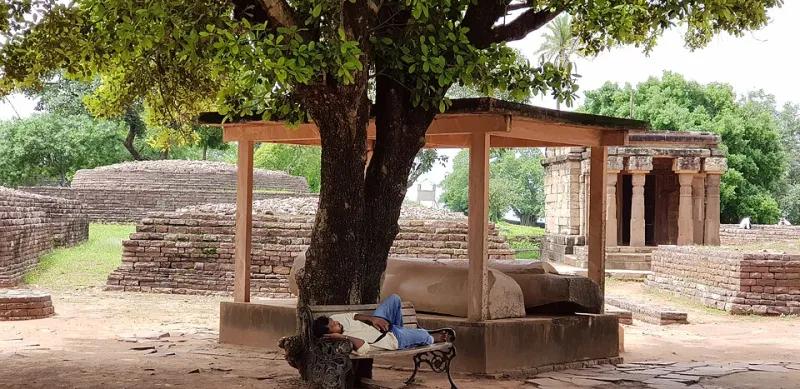
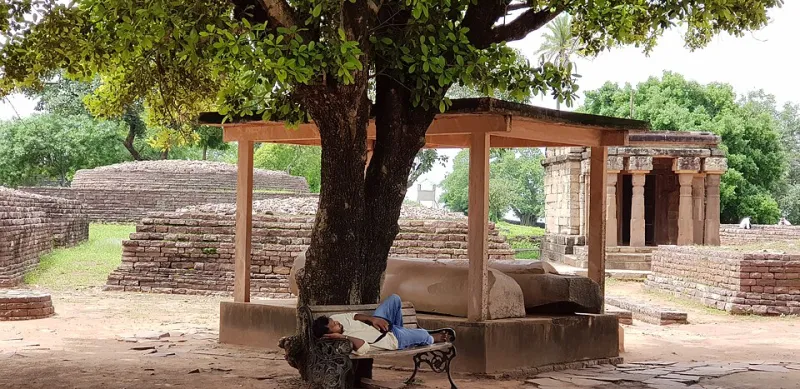
Photo: Indrajit Das, CC BY-SA 4.0, via Wikimedia Commons
Picture this: you're flat on your back, eyes closed, not lifting a single weight. Your heart rate is climbing. Your core temperature is rising. You're sweating through a thin cotton yukata at a pace that would make your spin instructor raise an eyebrow. And you haven't moved a muscle in twenty-five minutes.
Welcome to ganbanyoku — Japan's ancient rock bath tradition — and the most confusing workout you've never technically done.
For Americans raised on the gospel of "no pain, no gain," this scenario doesn't compute. We've been conditioned to believe that effort looks like effort: red faces, clanging barbells, Peloton leaderboards. Stillness, in the American fitness lexicon, is the enemy. It's what you do between workouts, not during them. So why are former marathon runners, competitive CrossFitters, and diehard gym rats flying to Japan and coming home swearing that lying on heated volcanic stone did more for their bodies than months of structured training?
The answer, it turns out, is buried in some genuinely fascinating physiology — and a cultural blind spot so large most of us have never even noticed it.
Your Body Doesn't Know You're "Resting"
Here's the thing about ganbanyoku that trips up first-timers: your brain might be doing nothing, but your cardiovascular system absolutely is not.
When you lie on a ganbanyoku stone bed — typically heated to around 40–45°C (104–113°F) using natural materials like tourmaline, black silica, or far-infrared-emitting volcanic rock — your body enters a state of thermogenic overdrive. Core temperature rises. Blood vessels dilate. Your heart pumps harder to push blood toward the skin surface in an attempt to cool you down.
"The cardiovascular response to passive heat exposure is genuinely comparable to moderate aerobic exercise," explains the growing body of research coming out of institutions like the University of Oregon's exercise science department, which has studied heat therapy's effects on circulation and metabolic function. "We're talking elevated heart rate, increased cardiac output, measurable caloric expenditure — without a single voluntary muscle contraction."
In plain English: your body is working. Hard. You just aren't.
This phenomenon — called passive thermogenesis — isn't new science. What's new is the Western fitness world slowly, reluctantly acknowledging that exercise isn't the only pathway to the physiological benefits we've been chasing at the gym.
The "Active Recovery" Myth We've Been Selling Ourselves
Ask any personal trainer about recovery, and they'll likely prescribe "active recovery" — a light jog, a yoga flow, a foam rolling session. The implication is clear: even rest should look busy. Even downtime should be optimized.
Ganbanyoku blows that framework apart.
Take Jake, a 34-year-old software engineer from Austin who ran three marathons in two years before chronic knee inflammation forced him to rethink his entire approach to fitness. He stumbled into a ganbanyoku facility in Hakone almost by accident during a work trip to Tokyo.
"I felt embarrassed at first," he admits. "Everyone around me was just... lying there. I kept thinking I should be doing something. Stretching, at least. But by the second session, my knees felt better than they had in eight months. I couldn't explain it."
What Jake experienced wasn't a fluke. Far-infrared heat — the kind emitted by many ganbanyoku stones — penetrates tissue at a depth that surface-level heat sources like hot tubs or electric heating pads simply can't replicate. This deep tissue warming increases local circulation, supports the removal of metabolic waste products, and reduces inflammatory markers in a way that feels, from the outside, indistinguishable from doing absolutely nothing.
That's the paradox. The stillness is the mechanism, not a side effect.
What Sports Physiologists Are Actually Saying
The research landscape around heat therapy has shifted dramatically in the last decade. Studies published in journals like the Journal of Applied Physiology and Experimental Physiology have documented improvements in vascular function, insulin sensitivity, and even muscle protein synthesis following repeated passive heat sessions.
Dr. Rhonda Patrick, a cell biologist who has become something of a cult figure in American biohacker and athlete communities, has spoken extensively about the cardiovascular and hormonal benefits of heat stress — including the release of growth hormone during sauna-like heat exposure. While her work focuses primarily on traditional Finnish saunas, the mechanisms she describes apply directly to the far-infrared environment of a ganbanyoku room.
The difference, practitioners argue, is in the quality of the experience. Traditional saunas heat the air around you. Ganbanyoku heats the stone beneath you, which then radiates far-infrared energy directly into your body's tissues. Many users describe it as warmth that comes from the inside out — a sensation that's difficult to articulate until you've felt it.
"It's like the difference between standing next to a campfire and being warmed by the sun on a winter day," says Mia, a yoga instructor from Portland who now incorporates regular ganbanyoku sessions into her annual Japan trips. "One is surface heat. The other goes somewhere deeper."
Why American Gym Culture Makes This So Hard to Accept
Let's be honest: the American relationship with exercise is deeply moralistic. We don't just work out for health. We work out to earn rest, to justify meals, to demonstrate discipline. Effort is visible, quantifiable, shareable. Strava segments. MyFitnessPal logs. Before-and-after photos.
Ganbanyoku offers none of that external validation. You can't post a PR from a rock bath. There's no leaderboard. Your Apple Watch will dutifully record an elevated heart rate and then stare back at you with a workout summary that says, essentially, "you lay down for 45 minutes."
And yet the results speak loudly. Athletes report faster recovery between training blocks. Desk workers describe reduced chronic tension in their necks and lower backs. People with stress-related insomnia find their sleep quality improving after consistent sessions. Skin glows. Mood lifts. Something shifts.
The challenge is giving yourself permission to count it.
Planning Your Own Rock Bath Reset in Japan
If this has you curious — and honestly, it should — Japan makes it remarkably easy to build ganbanyoku into a wellness-focused trip. Facilities range from stand-alone day spas in major cities like Tokyo and Osaka to multi-night ryokan retreats in volcanic regions like Beppu, Hakone, and the Kirishima highlands.
For first-timers, a standalone urban facility is a low-stakes entry point. Most charge between ¥1,000 and ¥2,500 (roughly $7–$17 USD) for a session that typically includes access to the stone beds, a cotton yukata, and a resting area. Sessions usually run in 15–20 minute intervals with short breaks in between.
For the full immersion experience, consider pairing ganbanyoku with an onsen ryokan stay. The combination of mineral-rich hot spring bathing and far-infrared stone therapy creates a layered approach to recovery that even the most skeptical American gym devotees tend to find... persuasive.
The Stillness Is the Point
Here's what ganbanyoku ultimately asks of you: trust that your body knows what to do when you stop interrupting it.
For a culture that has turned optimization into an identity, that's a genuinely radical proposition. But the physiology doesn't care about your hustle narrative. Heat is heat. Circulation is circulation. Recovery is recovery — whether it happens on a Peloton or on a slab of heated black silica in a quiet room in Kyoto.
The ganbanyoku paradox isn't really a paradox at all. It's just proof that sometimes the most active thing you can do is lie very, very still.