Hot Rocks, Real Relief: What Physical Therapists Are Quietly Telling Their Chronic Pain Patients About Ganbanyoku
Lisa Moreno had tried everything. Three years of physical therapy, two rounds of cortisone injections, a standing desk, a $400 lumbar pillow, and a meditation app she used exactly four times. Her lower back pain—a stubborn, grinding ache that had followed her since a car accident in 2019—wasn't going anywhere. Then her physical therapist in Portland, Oregon, said something she didn't expect: Have you ever considered going to Japan?
Not for the temples. Not for the food. For the rock baths.
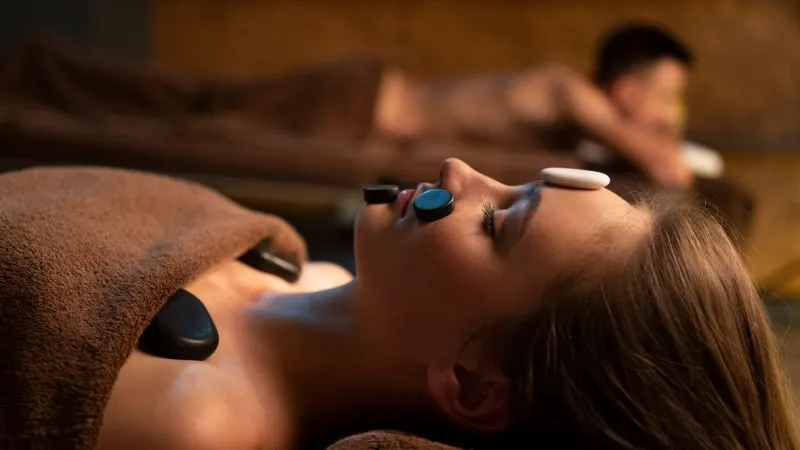
"I honestly thought she was joking," Lisa says. "But she pulled up research on ganbanyoku and walked me through it. Six months later, I was lying on a slab of warm tourmaline stone in Kagoshima, and I haven't had a bad pain week since."
Lisa's story isn't an outlier anymore. Across the US, a quiet shift is happening inside physical therapy clinics and pain management practices. Ganbanyoku—Japan's traditional form of heated stone therapy where you lie directly on mineral-rich rocks warmed to around 104–140°F—is moving from cultural curiosity to legitimate clinical conversation.
Why Sustained Heat Is Different From Your Heating Pad
Here's the thing most people don't realize: not all heat therapy is created equal. The heating pad you press against your back while watching Netflix operates on surface-level warmth. Ganbanyoku works differently—and the distinction matters enormously for people dealing with chronic pain conditions.
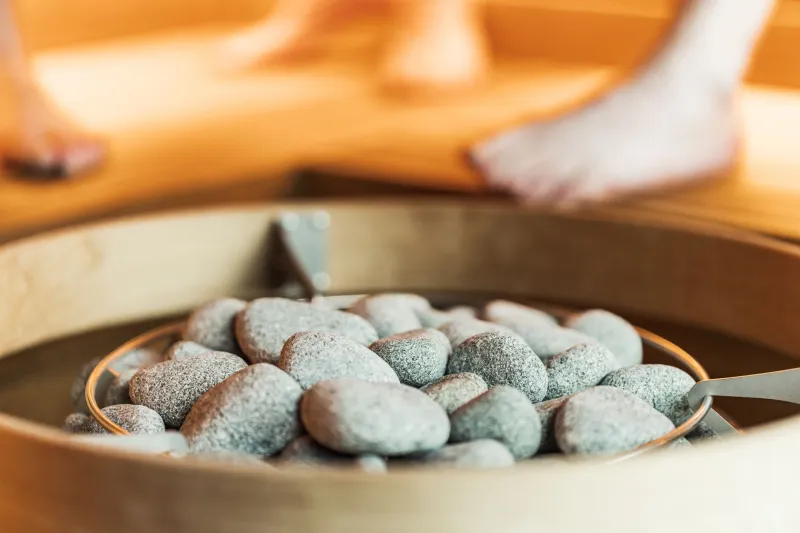
The stones used in ganbanyoku—tourmaline, germanite, and far-infrared-emitting minerals like nantokite—generate radiant heat that penetrates several centimeters into muscle tissue. This isn't just warmth sitting on top of your skin. It's heat that reaches the connective tissue, the fascia, the deep muscle groups that standard thermal therapy can't reliably access.
"What we're talking about is thermotherapy at depth," explains Dr. Karen Whitfield, a licensed physical therapist based in Austin, Texas, who began recommending ganbanyoku to select patients in 2022 after researching Japanese rehabilitation practices. "When you achieve genuine deep-tissue vasodilation, you get increased blood flow to areas that are often chronically under-perfused in pain patients. That means more oxygen, more nutrient delivery, and faster clearance of inflammatory byproducts."
In plain English: the heat goes where the problem actually is.
Lower Back Pain: The American Epidemic That Ganbanyoku Addresses Directly
About 80% of Americans will experience significant lower back pain at some point in their lives. It's the leading cause of job-related disability and one of the most common reasons people visit a doctor. Standard treatment is effective for acute cases, but chronic sufferers often hit a wall.
Ganbanyoku's horizontal positioning is part of what makes it particularly relevant here. Unlike a sauna, where you're seated upright, ganbanyoku has you lying flat on the stone surface—a position that naturally decompresses the lumbar spine while the radiant heat works on the surrounding musculature.
Takahiro Nishimura, a wellness practitioner at a traditional ganbanyoku facility in Beppu, has worked with pain patients for over fifteen years. "Many guests come to us describing what they call a 'locked' feeling in the lower back," he says. "After two or three sessions, the muscles surrounding the spine begin to release tension they have held for years. We see it happen consistently."
Multiple guests report that the relief they feel isn't just temporary relaxation—it's a reset that persists. Lisa Moreno says her pain levels dropped by roughly 60% during her two-week stay in Japan and remained significantly reduced for over eight months after returning home. "I still do my PT exercises," she says. "But the baseline I came back with was completely different."
Arthritis and Fibromyalgia: The Harder Cases
For arthritis sufferers, the calculus around heat therapy has historically been complicated. Heat can ease stiffness in osteoarthritis but risks inflaming joints in rheumatoid cases. Ganbanyoku practitioners and researchers in Japan have noted that the far-infrared radiation emitted by certain stone types appears to produce anti-inflammatory effects at the cellular level—a mechanism distinct from simple thermal expansion.
A 2020 study published in the Journal of Integrative Medicine examined far-infrared therapy's effects on rheumatoid arthritis patients and found meaningful reductions in pain scores and morning stiffness with repeated sessions. While the study wasn't conducted specifically in a ganbanyoku context, the thermal profiles are closely aligned.
Fibromyalgia presents its own puzzle. The condition—characterized by widespread musculoskeletal pain, fatigue, and sleep disruption—is notoriously resistant to treatment. Dr. Whitfield has referred four fibromyalgia patients to ganbanyoku experiences in Japan over the past two years. "Three of the four reported substantial improvement in pain levels and sleep quality," she says. "One described it as the first two weeks in five years where she didn't wake up feeling like she'd been hit by a truck."
The sleep connection is significant. Ganbanyoku's deep relaxation effect on the autonomic nervous system—shifting the body from sympathetic (fight-or-flight) dominance toward parasympathetic (rest-and-digest) states—may be part of why fibromyalgia patients respond so well. Poor sleep amplifies pain perception, and anything that genuinely improves sleep quality creates a cascading positive effect.
What Japanese Practitioners Know That We're Still Learning
Ganbanyoku has been practiced in Japan for centuries, and traditional practitioners have long understood something that Western medicine is only beginning to quantify: the relationship between thermal regulation, mineral absorption through the skin, and systemic inflammation.
Nishimura-san points to the mineral composition of the stones themselves as an underappreciated factor. "Tourmaline naturally emits negative ions and far-infrared radiation. When you lie on it for 40 to 50 minutes, you are receiving a form of therapy that has no real equivalent in Western wellness."
US-based practitioners are increasingly taking note. Dr. Whitfield now dedicates a section of her patient intake process to discussing complementary thermal therapies. "I'm not telling anyone to skip their medication or cancel their PT appointments," she says carefully. "But if someone has the means and the interest to travel to Japan, I absolutely think ganbanyoku belongs in the conversation for chronic pain management."
Practical Considerations Before You Go
If you're managing a chronic pain condition and considering ganbanyoku as part of your wellness strategy, a few things are worth knowing before you book flights.
First, frequency matters. A single session produces noticeable effects, but the most significant and lasting relief tends to come from repeated exposure over several days. Most serious wellness travelers plan a minimum of five to seven sessions across a stay. Many ganbanyoku facilities in regions like Beppu, Kinosaki Onsen, and the Tohoku area offer multi-day packages specifically designed for therapeutic purposes.
Second, hydration is non-negotiable. Chronic pain patients—especially those on certain medications—need to be diligent about fluid intake before, during, and after sessions. The sweating is substantial, and dehydration will undermine the very benefits you're there for.
Third, consult your doctor or physical therapist before traveling specifically for therapeutic purposes. While ganbanyoku is generally very safe, certain cardiovascular conditions and some inflammatory arthritis presentations require professional guidance on session length and frequency.
The good news? Most people come back not just feeling better—but wanting to come back. For chronic pain sufferers who've spent years being told to manage expectations, that alone is something worth sweating for.