The Math Nobody Does: Why a Week of Japanese Rock Baths Costs Less Than Your Current Wellness Routine
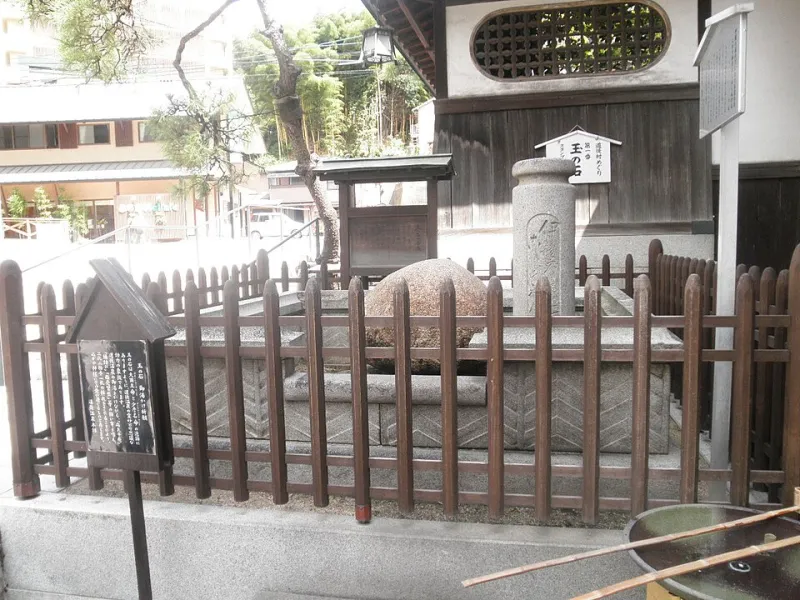
Photo: Mti, CC BY-SA 3.0, via Wikimedia Commons
There's a particular kind of financial denial that lives inside the American wellness industry. It doesn't look like overspending. It looks like self-investment — a reasonable gym membership here, a monthly massage there, a supplement stack that a podcast convinced you was non-negotiable. Individually, each line item feels justifiable. Together, they quietly add up to something that would make your accountant wince.
Now consider this: a well-planned, ganbanyoku-focused week in Japan — flights, accommodation, meals, and all the hot-stone sessions you can handle — often costs less than what the average American spends on wellness in a single calendar year. Not less per session. Less total.
We ran the numbers. The results are hard to argue with.
What the Average American Actually Spends on Wellness
Let's build an honest picture. According to industry data, the average American gym membership runs between $40 and $70 per month. That's up to $840 a year for access to equipment most people use inconsistently by February. Add a monthly massage — a conservative $90 to $130 per session at a mid-range spa — and you're looking at another $1,080 to $1,560 annually.
Therapy? The national average for a 50-minute session without insurance hovers around $150 to $200. Even biweekly visits clock in at $3,900 to $5,200 per year. Supplements — magnesium, collagen, adaptogens, vitamin D — add another $50 to $150 monthly depending on how deep your rabbit hole goes. Toss in a quarterly facial, a few infrared sauna drop-ins at the local wellness studio, and a yoga class pack or two, and you're comfortably looking at $8,000 to $12,000 a year in fragmented self-care spending.
And here's the kicker: most people doing all of this still don't feel particularly well-rested.
What a Ganbanyoku Trip to Japan Actually Costs
Let's price out a real trip. Round-trip flights from major US hubs to Tokyo or Osaka — booked a few months in advance, economy class — typically run $700 to $1,100. Budget accommodations in Japan, including guesthouses and mid-range business hotels, average $60 to $100 per night. A week's lodging: $420 to $700.
Ganbanyoku sessions themselves are remarkably affordable by Western spa standards. Most facilities charge between ¥500 and ¥1,500 per session — roughly $3.50 to $10 USD. Many larger onsen resorts bundle unlimited ganbanyoku access into a day pass ranging from $15 to $35. Visit daily for seven days and you're spending $105 to $245 on the core wellness experience.
Food in Japan, even eaten well, is famously reasonable. Budget $25 to $50 per day for meals — that's $175 to $350 for the week. Local trains and transit add another $100 to $200 depending on your itinerary.
Total trip cost, conservatively: $1,500 to $2,600. On the generous end, with a few splurges: $3,500.
Compare that to your annual wellness tab. The trip wins. Often by a factor of three or four.
Why Fragmented Wellness Is So Expensive — and So Incomplete
The American wellness market is structurally designed to sell you pieces of something whole. A gym membership addresses fitness but not relaxation. A massage handles tension but not mental stillness. Therapy works the mind but rarely touches the body. Supplements promise systemic support but require months to assess. Each product or service exists in isolation, which means you need all of them — and even then, the gaps between sessions leave you perpetually catching up.
Ganbanyoku is different in a way that matters financially. Lying on heated mineral stones — typically far-infrared-emitting materials like black silica, tourmaline, or bian stone — simultaneously addresses circulation, muscle recovery, skin hydration, stress reduction, and a form of meditative stillness that most Americans struggle to access through conventional means. It doesn't replace therapy, but it creates the kind of parasympathetic calm that makes everything else work better. It's not a gym substitute, but the deep-tissue warmth and passive sweating offer genuine recovery benefits that many athletes and trainers swear by.
In other words, one experience does a lot of heavy lifting that currently requires four or five separate subscriptions back home.
The Hidden Cost Americans Forget to Count
There's another number missing from most wellness budgets: time. Driving to the gym, waiting for a massage appointment, commuting to a therapy session — the average American spends somewhere between three and six hours per week managing their fragmented wellness routine. Over a year, that's 150 to 300 hours. Assign even a modest dollar value to your time, and the cost of your current system balloons considerably.
A ganbanyoku trip compresses the return on all that effort into a single, immersive week. You're not multitasking your self-care between errands. You're doing nothing — deliberately, completely, in a warm room full of mineral-rich stone — and letting the environment do the work. The Japanese have understood for generations that restoration isn't something you schedule around your life. It's something you build your life around, even temporarily.
Where to Go to Make the Budget Work
For American travelers building a cost-conscious ganbanyoku itinerary, a few destinations consistently deliver outsized value. Beppu in Oita Prefecture remains one of Japan's most accessible hot spring cities, with dozens of facilities offering ganbanyoku at budget-friendly rates and accommodation that won't strain a modest travel budget. Yufuin, just a short bus ride from Beppu, adds a boutique, village-style atmosphere without a dramatic price increase.
Kinosaki Onsen in Hyogo Prefecture is another strong option — a compact town where a single day pass grants access to multiple bathhouses, several of which include ganbanyoku facilities. For travelers already planning a Tokyo or Osaka base, a two- or three-night extension to either destination adds meaningful wellness depth without requiring a separate flight.
Larger urban super-sentos — sprawling day-spa complexes found throughout Tokyo, Osaka, and Nagoya — are worth noting too. Entry fees typically run ¥1,000 to ¥2,500, and many include ganbanyoku rooms, rest areas, food courts, and outdoor baths. Spend a full day at one of these and you've essentially had a spa retreat for under $20.
Rethinking the ROI of Your Next Vacation
Most Americans don't think of international travel as a wellness investment. It feels like a splurge, a reward, a departure from responsible financial behavior. But when you actually map the numbers — annual US wellness spending versus an all-in Japan trip — the vacation starts looking less like an indulgence and more like a consolidation strategy.
You're not adding a new expense. You're redirecting existing ones toward something that actually works. The gym will still be there when you get back. The supplements will wait. But a week on Japanese hot stones, in a country that treats stillness as a discipline rather than a luxury, has a way of resetting your baseline in ways that no monthly membership has ever quite managed.
Sometimes the most financially sound thing you can do for your wellbeing is get on a plane.