Still Body, Loud Mind: What Lying on Japanese Hot Rocks Reveals About American Burnout Culture
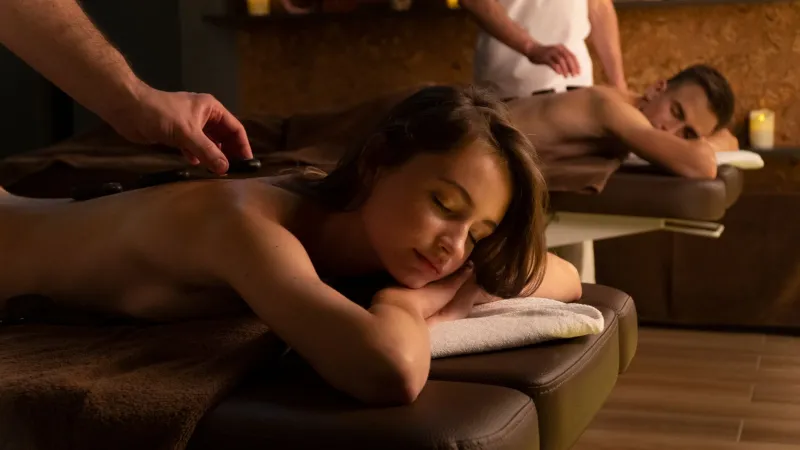
There's a specific kind of panic that doesn't come with a racing heartbeat or sweaty palms. It arrives quietly, about four minutes into your first ganbanyoku session, when you realize there is genuinely nothing you are supposed to be doing right now. No phone. No podcast. No to-do list mentally composing itself in the background. Just you, a thin cotton yukata, and a slab of heated volcanic stone warming you from below.
For most Americans, that's when the ceiling gets very interesting.
The Setup Nobody Warns You About
Ganbanyoku — Japan's tradition of lying on naturally heated rock beds, often made from minerals like black silica or tourmaline — looks deceptively simple from the outside. You check in, change into provided loungewear, find a warm stone platform, and lie down. That's it. Sessions typically run 45 minutes to an hour, broken into intervals with short cool-down breaks. The heat is gentler than a traditional sauna, hovering around 40–45°C (104–113°F), and the experience is designed to be slow, passive, and deeply restorative.
Japanese regulars treat it like a weekly ritual. They arrive, they settle, they sweat quietly, they leave looking like they've had eight hours of sleep compressed into one.
American first-timers, on the other hand, frequently report a version of the same experience: an overwhelming urge to do something.
When Stillness Feels Like a Waste of Time
Here's the uncomfortable truth that ganbanyoku has a way of surfacing: a huge portion of the US workforce has quietly conflated rest with laziness. We've built an entire cultural identity around output. We brag about being busy. We treat exhaustion as a badge of honor. "I'll sleep when I'm dead" isn't just a throwaway phrase — for a lot of people, it's a genuine operating philosophy.
So when you remove the phone, the productivity app, the workout tracker, and the Slack notifications, and you ask an American to just... be horizontal on a warm rock for an hour, you're not just asking them to relax. You're asking them to stop performing.
And that, it turns out, is terrifying.
Psychologists who study rest and recovery have a term for this: "rest anxiety." The inability to disengage from task-oriented thinking even when the body is physically still. It's not laziness — it's the opposite. It's a nervous system so thoroughly trained to associate value with activity that genuine downtime registers as a threat.
Ganbanyoku doesn't let you fake your way through it. You can't multitask on a hot rock.
What the Japanese Understand That We Don't
In Japan, the concept of ma — often translated as "negative space" or "pause" — is woven into art, architecture, music, and daily life. It's the understanding that emptiness isn't absence; it's presence of a different kind. The silence between notes. The space in a room that lets the furniture breathe. The moment of stillness that makes the next movement meaningful.
Ganbanyoku fits neatly into that philosophy. The heated stone isn't just warming your muscles — it's creating a container for ma. A structured, culturally sanctioned space where doing nothing is the entire point.
American wellness culture, by contrast, tends to gamify everything. We track our heart rate variability during meditation. We optimize our sleep with wearables. We turn yoga into a competitive athletic pursuit. Even our rest has KPIs.
What ganbanyoku offers — and what makes it so disorienting for US visitors — is rest without metrics. There is no data output. No calories burned counter. No progress bar. You cannot optimize a hot rock session. You can only surrender to it.
The Paradox at the Center of It All
Here's where it gets genuinely interesting: the visitors who resist ganbanyoku the most tend to benefit from it the most profoundly.
The person who spends the first 15 minutes mentally drafting emails, then spends the next 15 minutes feeling guilty about drafting emails, then spends the final 15 minutes actually letting go — that person often walks out of the session describing something close to a revelation. Not enlightenment, exactly. More like the feeling of putting down a backpack you'd forgotten you were wearing.
The paradox is this: ganbanyoku teaches you something about American burnout not by lecturing you about it, but by forcing you to inhabit it. The resistance you feel in that room is the burnout. The anxiety about doing nothing is the same anxiety that's been running in the background of your life for years, just finally loud enough to hear.
You needed to be horizontal on a hot rock in rural Japan with no WiFi signal to finally notice it.
Why This Matters More Than a Spa Day
This isn't about ganbanyoku being inherently superior to a massage or a float tank or whatever wellness modality you've already invested in. It's about what happens when you travel far enough from your default environment that your coping mechanisms stop working.
At home, you can fill every quiet moment with stimulation. In a ganbanyoku room in Hokkaido or Kyushu, that option simply doesn't exist. The experience creates a kind of enforced honesty. You can't scroll your way out of it. You can't schedule your way around it. You just have to be there, in the warmth, with whatever thoughts surface.
For many Americans, those thoughts are uncomfortable. They involve questions about identity, worth, and what exactly they're running toward at the pace they've chosen. Heavy stuff for a Tuesday afternoon in a Japanese hot spring town.
But that discomfort? That's the whole point. That's the work ganbanyoku is doing, even when — especially when — it looks like you're doing nothing at all.
Planning Your Own Confrontation with Stillness
If this sounds less like a spa vacation and more like an accidental therapy session, well — you're not wrong. But it's also one of the most affordable and accessible wellness experiences Japan offers. Most ganbanyoku facilities charge between ¥500 and ¥2,000 per session, and many are attached to larger onsen complexes where you can spend an entire day moving between hot springs, rock baths, and rest areas.
A few practical notes for US visitors:
- Leave the devices at the locker. Most facilities prohibit phones in the bathing areas anyway, but even if yours doesn't, resist the urge. The discomfort of disconnection is part of the experience.
- Don't fight the timeline. Sessions are structured for a reason. Trust the intervals. Let the heat do its job.
- Expect the mental noise first. The first ten minutes are often the loudest, mentally speaking. Stick with it. The quiet usually comes.
- Go more than once. One session shows you the door. A week of sessions walks you through it.
Japan has hundreds of ganbanyoku facilities scattered across prefectures from Aomori to Okinawa, each with slightly different mineral compositions and regional character. The destination matters less than the decision to show up, lie down, and let the rock do what the rock does.
Your burnout didn't build itself overnight. Give the stones a fighting chance.