Naked, Still, and Somehow at Home: The Strange Magic That Happens to Americans in a Ganbanyoku Room
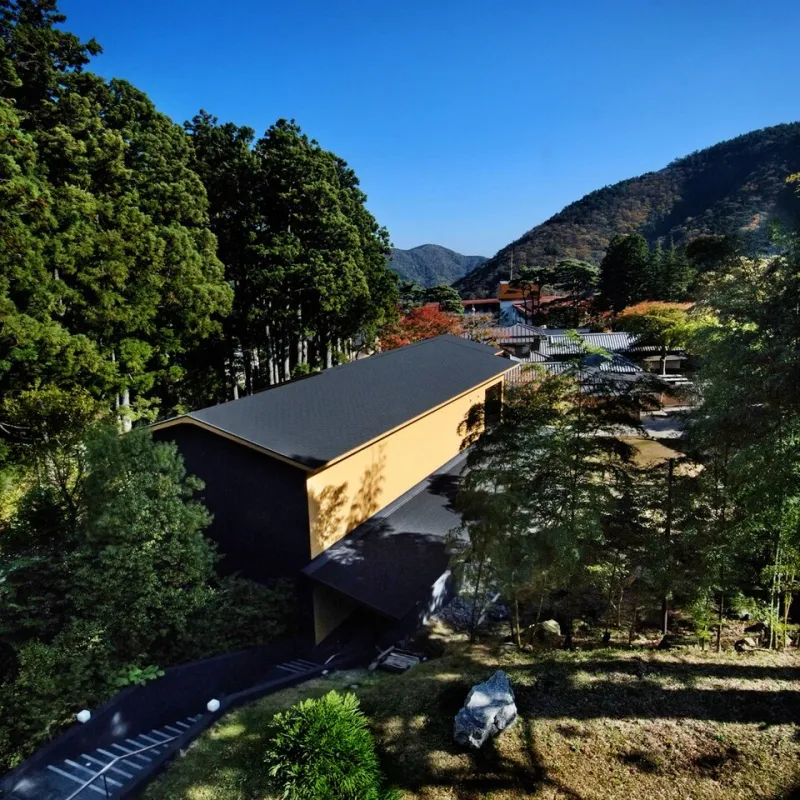
Photo: William Cho, CC BY-SA 2.0, via Wikimedia Commons
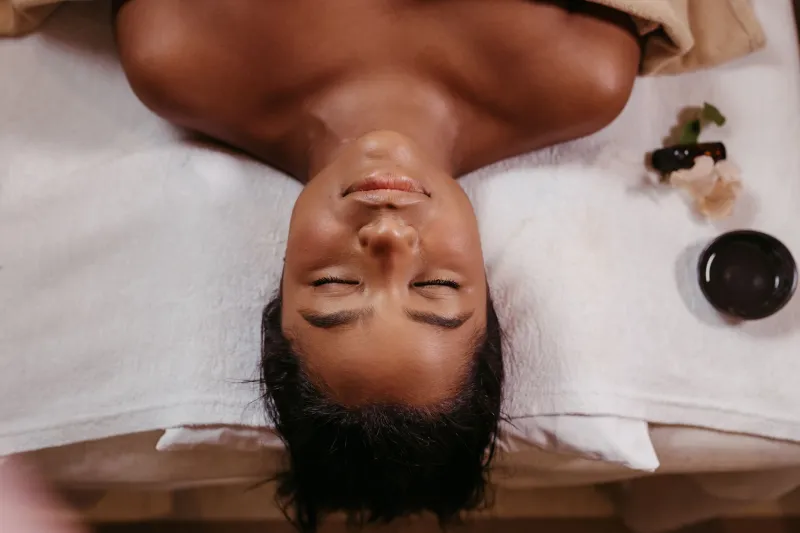
You flew thirteen hours. You lugged your carry-on through a labyrinthine train system. You fumbled through a convenience store transaction using hand gestures and a hopeful smile. And now here you are — lying flat on a heated stone floor in a cotton yukata, surrounded by Japanese strangers doing the exact same thing, and nobody is looking at their phone.
This is ganbanyoku. And for most Americans, the first session is quietly one of the strangest and most clarifying experiences of their lives.
The Setup That Should Feel Awkward (But Doesn't)
Let's be honest about what ganbanyoku actually asks of you. You change into a thin robe. You lie down on a slab of heated mineral stone — often tourmaline, jade, or volcanic rock — in a room that hovers between 104°F and 140°F. You sweat. You don't talk much. You just... exist.
For Americans raised in a culture that prizes productivity, personal space, and constant stimulation, this setup sounds like a recipe for existential discomfort. We're not great at stillness. We're not practiced at proximity to strangers without the social scaffolding of conversation or eye contact. And we are famously, almost pathologically, private about our bodies.
So why do so many American visitors describe their first ganbanyoku experience not as uncomfortable, but as a strange kind of relief?
Vulnerability Without Judgment
Part of the answer has to do with what sociologists sometimes call "anonymous intimacy" — the paradoxical closeness that emerges when people share a physically vulnerable experience without any social obligation to perform.
In a ganbanyoku room, everyone is horizontal. Everyone is sweating. Everyone has temporarily opted out of the status signals that dominate daily American life — the right outfit, the confident posture, the busy schedule. There's no networking happening on those stone floors. There's no one checking you out or sizing you up. The room has an almost democratic quality: bodies of all shapes, ages, and backgrounds, all equally prone, all equally warm.
For visitors from the US, where so much of public life is a subtle competition, this levelness can feel almost shocking.
"I kept waiting for it to feel weird," one traveler from Portland told us after her first visit to a ganbanyoku facility in Hakone. "But it never did. It just felt weirdly normal. Like this was something I'd been missing without knowing it."
The American Body Image Detour
It would be naive to skip over the body image dimension here. American culture sends relentless messages about how bodies should look, and those messages tend to make us deeply self-conscious in any situation where our bodies are visible or exposed. Gym locker rooms are fraught. Pools can be anxiety-inducing. The idea of lying in a semi-public space in a thin cotton robe, visibly sweating, might send some people straight back to the airport.
But ganbanyoku operates on different social logic. In Japan, the communal bath and spa tradition carries centuries of cultural weight. The body isn't a project to be judged — it's simply a body, doing what bodies do. That attitude permeates the ganbanyoku room in a way that visitors consistently describe as quietly liberating.
It's not that Japanese culture is magically free of body image pressures. But within the specific context of a ganbanyoku session, there's a shared understanding that everyone is there to rest and heal — not to be assessed. Americans, often without expecting it, absorb that norm within the first few minutes. The self-consciousness fades. The heat takes over. Something loosens.
Overstimulation, Meet Its Match
There's another layer to this that goes beyond bodies and social dynamics. Many American visitors to Japan are, by the time they find a ganbanyoku facility, already in a mild state of sensory overload. Tokyo alone — the neon, the crowds, the sheer density of information — can leave even seasoned travelers feeling like their nervous system is running at 140 percent.
Ganbanyoku is, in the most literal sense, the antidote to that state. The rooms are quiet. The lighting is dim. The heat is slow and enveloping rather than sharp or aggressive. There's nothing to read, nothing to scroll, nothing to decide. Your only job is to breathe and let the mineral-infused warmth do its work.
Neuroscience has started to catch up with what Japanese wellness culture has understood for generations: that deep, sustained heat applied to the body activates the parasympathetic nervous system — the "rest and digest" mode that most overstimulated Americans spend very little time in. The result isn't just physical relaxation. It's a genuine downshift in cognitive and emotional arousal that many visitors describe as unlike anything they experience back home.
"I've done meditation apps, float tanks, all of it," said a software engineer from Austin who visited a ganbanyoku center in Kyoto last spring. "Nothing got me as quiet inside as that first hour on the stones. I don't fully understand why."
Being the Outsider Who Belongs
There's one more dimension to the ganbanyoku paradox that's worth naming directly: the experience of being a foreigner in a deeply Japanese space, and finding that it doesn't matter.
American travelers often carry a low-grade anxiety about being the obvious outsider — the person who doesn't know the customs, who mispronounces things, who accidentally commits some unforgivable cultural error. Ganbanyoku, to a meaningful degree, dissolves that anxiety. The protocol is simple enough that it can be learned in five minutes. The room is silent enough that verbal fluency is irrelevant. And the shared experience of sweating on heated stones is universal enough that nationality becomes, for that hour, genuinely beside the point.
This is rare. And for Americans who spend their entire Japan trip feeling like conspicuous guests, the ganbanyoku room can be the first place they feel like they simply belong — not despite being different, but because the ritual itself transcends difference.
Why This Matters More Than It Might Seem
We live in a moment of profound social fragmentation. Americans report record levels of loneliness, anxiety, and disconnection. We've optimized our lives for privacy and convenience, and in doing so, we've quietly eliminated most of the spaces where unstructured, non-transactional human proximity used to happen.
Ganbanyoku, in its quiet way, offers something we've largely engineered out of our daily lives: the experience of being physically close to other people, without agenda, in a state of mutual vulnerability and rest.
That's not a small thing. And it might explain why so many American visitors — people who came to Japan for the food, the temples, the cherry blossoms — end up saying that the ganbanyoku session was the part that stayed with them longest.
The hot stones didn't just warm their bodies. They got somewhere deeper.
Ready to find your ganbanyoku moment? Browse our regional guides at 岩盤浴ナビ for facility recommendations, first-timer tips, and everything you need to plan a session that actually fits your trip.