The Unwritten Rules of Ganbanyoku: A Cultural Survival Guide for American Visitors

Most travel guides will tell you to shower before entering, keep your voice down, and bring a towel. That's the kindergarten version of ganbanyoku etiquette. It's accurate, and it'll keep you from committing the most obvious errors. But it won't prepare you for the moment a staff member gives you a look you can't interpret, or when you realize mid-session that everyone else in the room is doing something you weren't told about.
At 岩盤浴ナビ, we've spent years helping American travelers navigate Japanese wellness culture — not just the what, but the why. This guide goes deeper than the basics, covering the social dynamics, communication norms, and practical logistics that catch visitors off-guard in ways that are equal parts embarrassing and entirely avoidable.
First, Understand What Ganbanyoku Actually Is — Socially
Before getting into specific rules, it helps to understand the social context. Ganbanyoku in Japan isn't positioned as a luxury spa experience the way Americans tend to frame it. It's more like a neighborhood gym or a community bathhouse — a regular wellness practice that people integrate into ordinary life. Some regulars visit multiple times a week. The facility staff know their faces. There's a rhythm to the place.
When you walk in as a foreign visitor, you're entering a space with established social norms that most Japanese patrons have absorbed over years. Nobody expects perfection from you. But demonstrating that you've made an effort to understand the culture will be noticed and appreciated in ways that meaningfully improve your experience.
The Gender Protocol: It's More Nuanced Than You Think
Many ganbanyoku facilities are co-ed, which surprises American visitors who expect strict gender separation based on their understanding of traditional Japanese bathing culture. Unlike onsen baths, rock bath rooms don't involve nudity — guests wear facility-provided yukata (lightweight cotton robes) or designated ganbanyoku wear — so mixed-gender spaces are common and completely normal.
However, the changing areas, shower facilities, and sometimes the locker rooms remain gender-separated. The flow between these spaces can be confusing if you're not paying attention. Watch how other guests move through the facility before committing to a direction. If you're genuinely uncertain, a simple bow and a questioning look toward a staff member will almost always produce a helpful gesture in the right direction.
One thing that catches American visitors off-guard: at co-ed facilities, the expectation of quiet and stillness applies equally to everyone, and the social dynamic is genuinely neutral. This isn't a space where people socialize or make eye contact. Men and women lie on their respective stone slabs, face up or face down, and exist in parallel without interaction. Treating it any other way — even subtly — reads as disruptive.
Towel Culture: The Specific Thing You're Probably Getting Wrong
You'll be given a towel, possibly two. Here's what nobody explains: the small towel is not for drying yourself. It goes on the stone beneath you, or sometimes folded under your head. Its purpose is hygiene — keeping your sweat from direct contact with the shared surface — and placing it correctly is one of those small signals that communicates familiarity with the practice.
Do not use it to wipe your face aggressively during the session. Do not drape it over yourself like a blanket. Do not fold it into a pillow configuration that takes up extra space on the stone. The correct use is flat, under the body or head, changed between sessions if the facility offers session breaks.
At higher-end facilities, staff will sometimes replace your towel between sessions without being asked. Accepting this graciously — a small nod or a quiet "arigatou gozaimasu" — is appropriate. Waving it off or insisting you don't need it creates an awkward interaction that benefits nobody.
Communicating With Staff When You Don't Speak Japanese
This is where a lot of American travelers freeze up. The staff at regional ganbanyoku facilities outside major tourist centers often speak limited English, and the instinct to either over-explain in loud, slow English or to avoid interaction entirely are both counterproductive.
A few practical approaches that work:
Learn the key vocabulary before you arrive. "Ganbanyoku" (rock bath), "yukata" (the robe), "nando" (how many times/sessions), and "arigatou gozaimasu" (thank you, formal) will cover the majority of your interactions. Knowing these shows effort, and effort is genuinely appreciated.
For anything more complex — asking about the stone types, session timing, or facility rules — pull up Google Translate on your phone and type your question. Then hand the phone to the staff member. This is completely accepted practice in Japan and will not be considered rude. What would be considered rude is speaking loudly and slowly in English with increasing frustration when you're not understood.
When in doubt, observe and mirror. Japanese social norms are often transmitted through watching, not instruction. If you spend five minutes watching how other guests interact with the space before diving in, you'll absorb about 80% of what you need to know.
The Session Rhythm: Don't Freestyle It
Most ganbanyoku facilities structure the experience around sessions of roughly 15-45 minutes, with rest intervals between them. The specific timing varies by facility and is usually posted — often only in Japanese, which is another reason to do your research beforehand or ask at check-in.
American visitors tend to either overstay their first session (pushing through discomfort because they think more time equals more benefit) or cut sessions short because they're not sure what they're supposed to be feeling. Both approaches miss the point.
The rest intervals between sessions are not dead time. They're part of the practice. You're meant to drink water, let your body temperature normalize, and allow the effects of the previous session to settle before re-entering. Some facilities have designated rest areas with reclining chairs specifically for this purpose. Using them correctly — quietly, without your phone out, without chatting — is part of the etiquette.
Seasonal Variations That Change the Experience
Facilities adjust their operations seasonally in ways that aren't always communicated clearly to foreign visitors. In summer months, some facilities run the stones at slightly lower temperatures to account for the ambient heat, and hydration protocols become more explicit — staff may offer water more proactively or post additional reminders. In winter, the transition between the heated rock room and the cooler rest areas becomes more dramatic and requires more mindful temperature management.
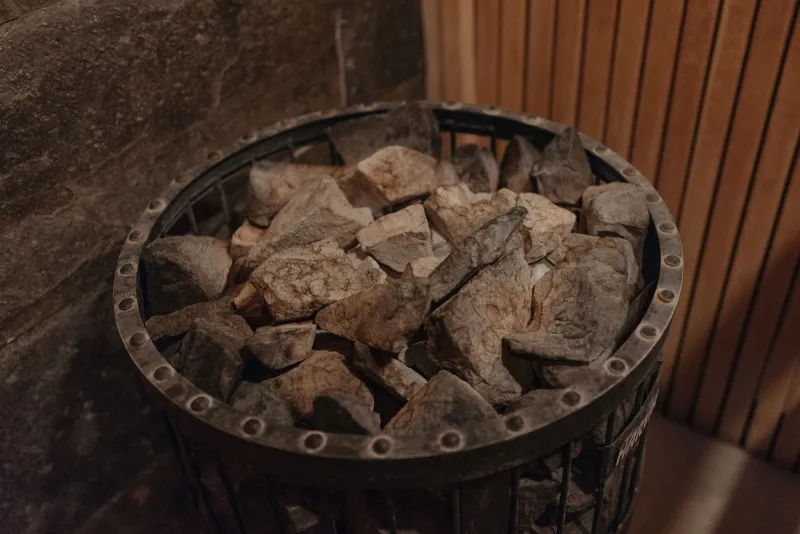
Some facilities also rotate the stone types available seasonally, or open outdoor components (like garden rest areas) only during specific months. If you have preferences about stone type or a specific feature you've read about, it's worth confirming availability before booking rather than assuming it'll be operational during your visit.
The Biggest Mistake: Treating It Like a Spa Day
Here's the cultural gap that underlies most of the specific etiquette issues: Americans tend to approach ganbanyoku as a luxury treat — something you do to pamper yourself, take Instagram photos of, and tell your friends about. Japanese regulars approach it as a practice — something you do consistently, quietly, without performance.
That difference in framing shapes everything from how loudly you enter the room to how long you spend adjusting your position on the stone. The more you can shift from "spa day" mode to "practice" mode, the more the experience will give back.
Nobody's expecting you to be perfect. But showing up with genuine respect for what the space is — rather than what you want it to be — is the single most important thing you can bring through the door.