Forget the Needle: How Japanese Rock Baths Are Quietly Outperforming Botox for Skin That Actually Glows
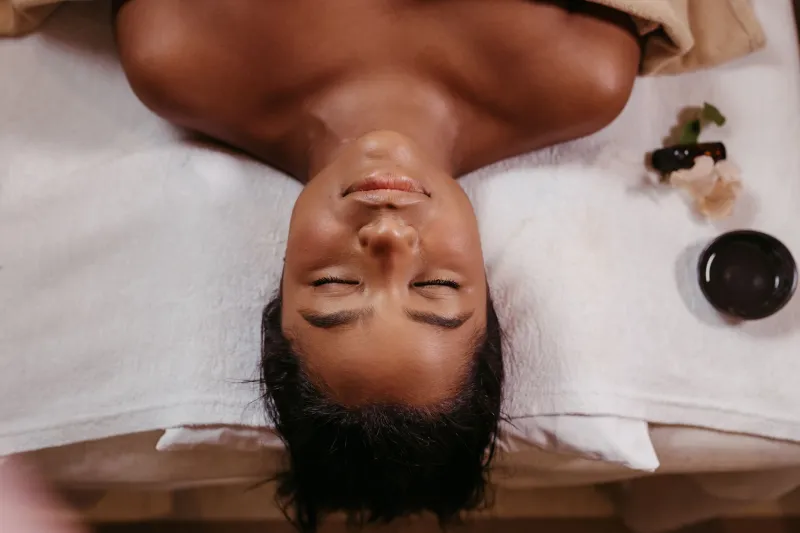
Photo: Japanese woman glowing skin rock bath spa mineral stones wellness, via i.shgcdn.com
There's a running joke in certain corners of Beverly Hills and the Upper East Side that the best-kept beauty secret isn't stocked at Sephora or administered in a med-spa. It's a heated stone floor in rural Japan. Laugh if you want — but dermatologists are starting to pay attention, and the science behind ganbanyoku's anti-aging effects is a lot more compelling than a sponsored Instagram post.
For those unfamiliar, ganbanyoku (岩盤浴) is the Japanese practice of lying on naturally heated mineral stones — typically tourmaline, black silica, or jade — while the body absorbs far-infrared radiation and low-level heat. Unlike a conventional sauna, the temperatures stay relatively moderate, usually between 104°F and 122°F, but the far-infrared energy penetrates several centimeters below the skin's surface. That's where things get interesting for anyone who cares about what their face looks like at 55.
What the Science Actually Says About Skin and Far-Infrared Heat
Far-infrared radiation (FIR) has been studied in clinical dermatology settings for over two decades, and the findings are quietly stacking up. A study published in the Journal of Photochemistry and Photobiology found that repeated FIR exposure stimulates fibroblast activity — fibroblasts being the cells responsible for producing collagen and elastin, the two proteins your skin desperately needs to stay firm and bouncy as you age.
Dr. Ayumi Nakashima, a Tokyo-based dermatologist who has consulted with several high-end ganbanyoku facilities, explains it simply: "When far-infrared energy reaches the dermis, it creates a gentle thermal stress that triggers a repair response. The skin essentially thinks it needs to rebuild, and it does. Collagen synthesis increases, microcirculation improves, and the skin starts functioning more like it did ten years ago."
That increased microcirculation is no small thing. Better blood flow to facial tissue means more oxygen and nutrients reaching skin cells — the same biological outcome that expensive laser treatments try to force through controlled trauma. Ganbanyoku gets there without breaking the skin barrier at all.
The Detox Angle: Sweating Through the Right Channels
Here's where ganbanyoku separates itself from a regular gym steam room. The sweat produced during a rock bath session is fundamentally different in composition. Because far-infrared heat activates the eccrine glands more thoroughly than surface-level heat, the perspiration contains a higher proportion of sebum, heavy metals, and lipid-soluble waste products — the stuff that clogs pores and contributes to dull, uneven skin tone over time.
Regular visitors to Japan's ganbanyoku facilities often describe a visible shift in their complexion after just three or four sessions. Sarah M., a 44-year-old marketing executive from Chicago who built a two-week trip to Kyoto and Arima Onsen around daily rock bath visits, described it this way: "By day five, my esthetician back home would have cried. My pores looked smaller, the redness I've had for years around my nose was calmer, and I genuinely looked less tired. I didn't change anything else — no new products, no extra sleep. It was just the ganbanyoku."
That kind of anecdotal evidence is everywhere among frequent visitors, and researchers are beginning to formalize it. A small but notable study out of Kagoshima University tracked skin hydration, pore size, and transepidermal water loss in participants who completed 20 ganbanyoku sessions over six weeks. Across all three metrics, the group showed statistically significant improvement compared to a control group.
Longevity Researchers Are Paying Attention Too
The anti-aging conversation isn't limited to dermatology. Dr. James Firth, a longevity researcher at a California-based wellness institute who has spent time studying traditional Japanese health practices, points to ganbanyoku as a compelling example of hormetic stress — the idea that mild, controlled physiological challenges activate the body's repair mechanisms in ways that slow cellular aging.
"What we're seeing is that heat stress, particularly far-infrared heat stress, upregulates heat shock proteins," Firth says. "These proteins act as cellular chaperones — they protect existing proteins from damage and help clear out dysfunctional ones. The skin reflects that cellular health pretty directly."
He's also quick to note the cortisol angle. Chronic stress is one of the most well-documented accelerators of skin aging, and ganbanyoku sessions consistently show reductions in salivary cortisol in study participants. Less stress hormone circulating through the body means less collagen breakdown, fewer inflammatory skin flare-ups, and a more resilient complexion over time.
The Cost-Benefit Case: Rocks vs. Injectables
Let's talk numbers, because this is where the ganbanyoku argument gets genuinely persuasive for Americans who are used to spending serious money on their skin.
A single Botox session in a major U.S. city runs anywhere from $300 to $600 and needs to be repeated every three to four months to maintain results. A round of Fraxel laser resurfacing? Budget $1,500 to $2,500 per treatment. Microneedling with PRP? Add another $700 to $1,500 to the tab. These are procedures that pause the clock temporarily, often require downtime, and carry real (if uncommon) risks of bruising, asymmetry, or skin reactions.
A ganbanyoku session at a quality facility in Japan costs between ¥1,000 and ¥3,000 — roughly $7 to $20 USD. Even accounting for the cost of a flight and accommodations, a two-week trip to Japan built around daily rock bath sessions, combined with the broader wellness benefits of onsen culture, hot spring meals, and stress recovery, is often comparable in price to a single round of cosmetic injectables back home. And the improvements, according to both researchers and regular visitors, compound over time rather than fading.
Where to Go in Japan for Skin-Focused Ganbanyoku
Not every ganbanyoku facility is created equal when it comes to skin benefits. Facilities using black silica (黒湯珪石) stones are particularly prized for their high far-infrared output. Arima Onsen in Hyogo Prefecture, Beppu in Oita, and Kusatsu Onsen in Gunma all have well-regarded ganbanyoku facilities that attract Japanese visitors specifically for their skin-enhancing reputations.
For American travelers planning a Japan trip with skin health in mind, it's worth researching facilities that specify the stone type used and offer extended session options — some venues allow 90-minute stays with rest intervals built in, which maximizes the cumulative thermal exposure without overheating.
The Bottom Line
Ganbanyoku isn't magic, and no responsible researcher is claiming it replaces medical-grade cosmetic care for everyone. But the science supporting its skin benefits — collagen stimulation, pore refinement, reduced inflammation, cellular stress response — is real, growing, and frankly underreported in Western wellness media.
If you're already planning a trip to Japan, building a few ganbanyoku sessions into your itinerary is one of the lowest-effort, highest-reward things you can do for your skin. And if you're one of the Americans quietly spending thousands a year on cosmetic procedures while wondering why your skin never quite looks as alive as you'd like — it might be worth booking a flight before your next appointment.
Your fibroblasts will thank you.